Why Septic Systems Fail After Heavy Rain in Eastern North Carolina
Why Your Septic System Backs Up After a Storm (And What Greenville, NC Homeowners Can Do About It)
If you have ever noticed slow drains, gurgling toilets, or a suspicious wet patch in your yard the day after a heavy rainstorm, you are not alone. For property owners across Pitt County and the greater Greenville area, post-storm septic trouble is one of the most common and most misunderstood household problems. Many homeowners immediately assume the tank needs pumping. But in most cases, the real culprit is something happening underneath your lawn that no pump truck can fix on its own.
Here is what is actually going on, and what you should do about it.
Eastern North Carolina's Hidden Septic Challenge: The Water Table
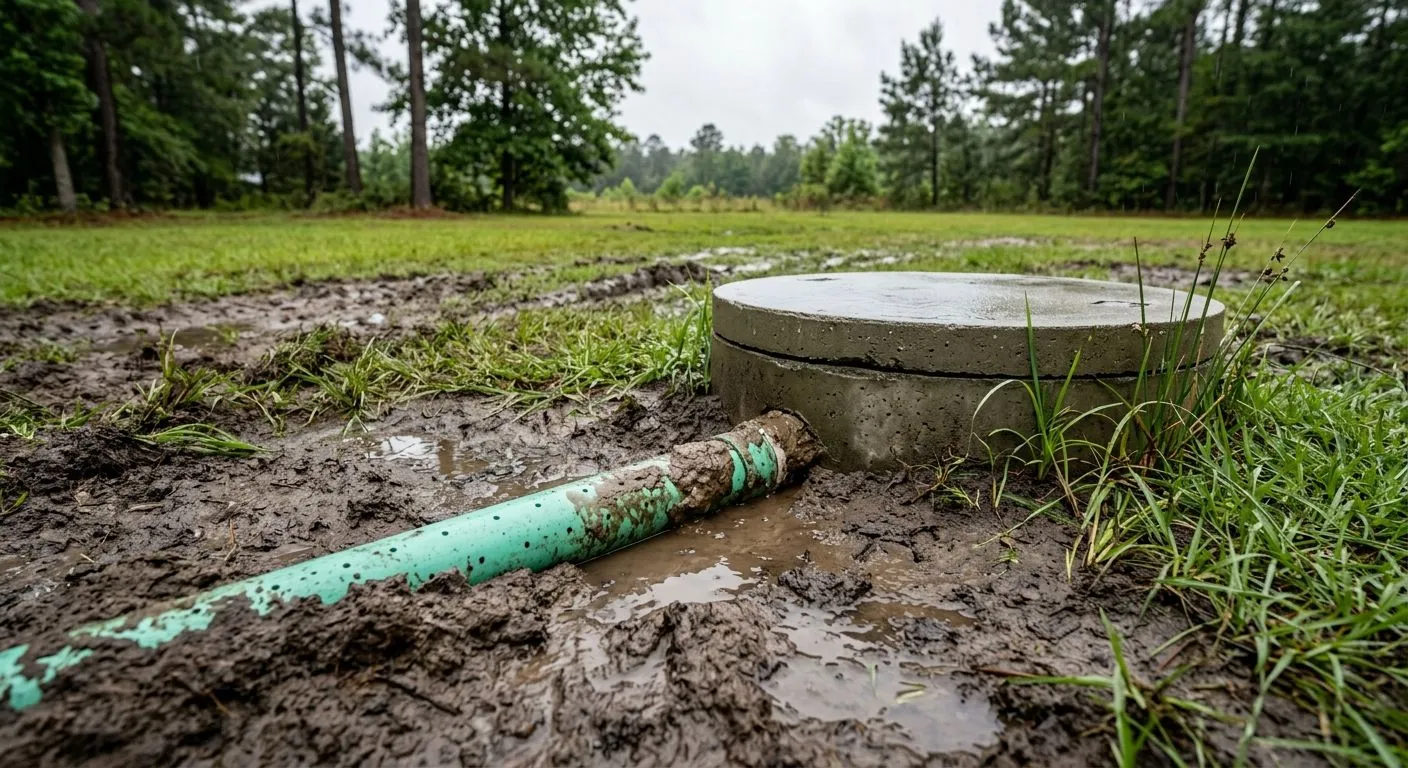
Greenville sits squarely in the flat coastal plain of Eastern North Carolina, a landscape that is beautiful but notoriously challenging for wastewater management. When a hurricane, tropical storm, or even a prolonged stretch of seasonal rain rolls through, groundwater levels can rise several feet in just a matter of hours.
This creates a serious problem for drainfields.
State regulations in North Carolina require a minimum of 1.5 to 2 feet of unsaturated soil beneath your drainfield trenches. This layer, called the Vertical Separation Distance (VSD), acts as a natural filter. It strips pathogens and contaminants from wastewater before that water ever reaches the groundwater supply beneath your property.
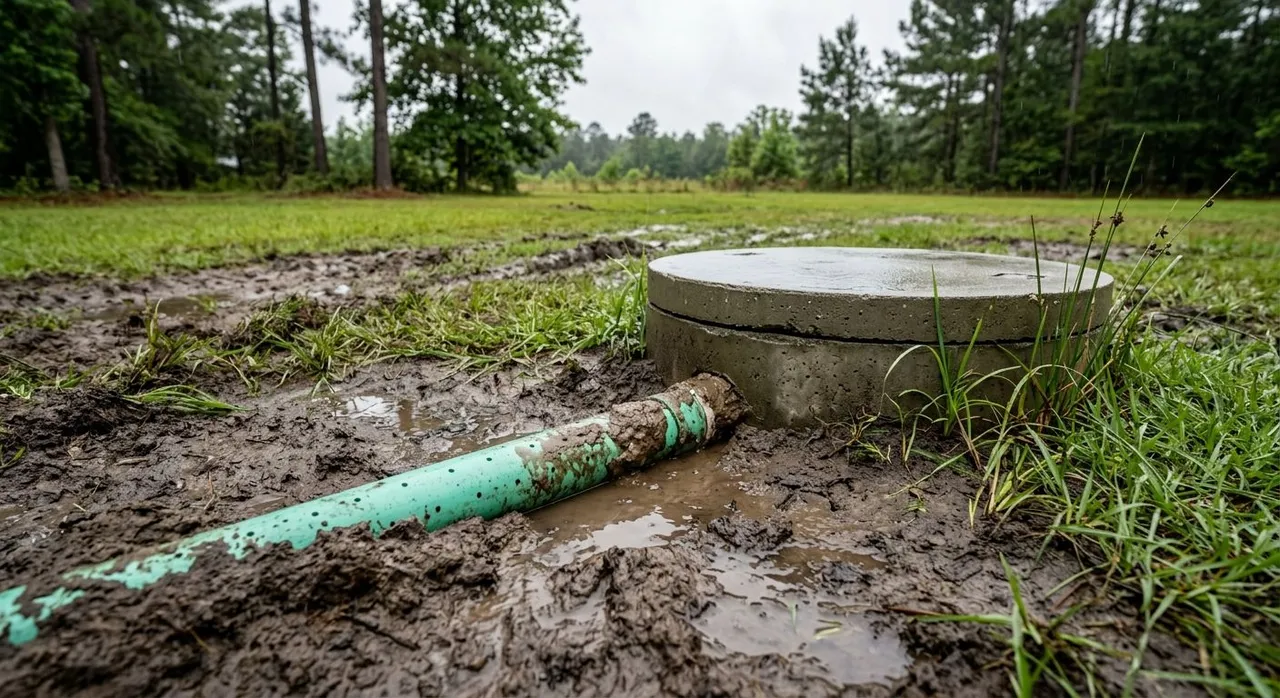
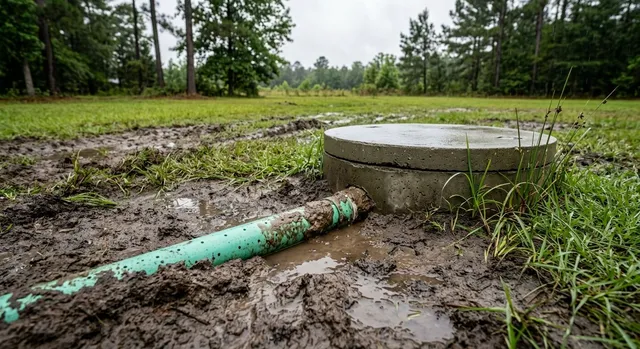
When the water table rises and saturates that soil layer, the filter effectively disappears. Wastewater leaving your tank has nowhere to go. The system backs up, drains slow to a crawl, and in serious cases, partially treated sewage surfaces on your lawn. This is not a sign that your tank is full. It is a sign that your soil cannot accept effluent right now, and pumping alone will not solve the underlying issue.
Pitt County's Soil Makes This Problem Worse
Not all soil is created equal, and Pitt County's landscape is a perfect example of that reality. The county features a complex mix of soil types sitting side by side. Some parcels have sandy loam soils (like Norfolk soil) that drain quickly. Others are dominated by heavy clay and dense silt loam varieties (like Coxville and Lenoir soils) that barely percolate at all.
Because the most favorable soils in the region have largely been built upon over the past several decades, newer construction and rural properties are increasingly landing on soil that is slower to drain and more prone to saturation. This is why standard gravity-fed septic systems are harder to permit today than they were 20 years ago.
If your property has borderline soils or sits in a lower-lying area, a single heavy rain event can push your drainfield to its limit. Over time, repeated saturation cycles can permanently damage the biomat layer inside your drainfield trenches, turning a seasonal nuisance into a full system failure.
The Failure Rate Nobody Talks About
Here is a statistic worth knowing: an estimated 10% to 20% of septic systems across North Carolina experience some form of malfunction every year. That number is likely underreported, because many homeowners quietly deal with sluggish drains or occasional odors rather than calling a professional and facing a repair bill.
North Carolina also has one of the highest rates of septic system dependency in the country. Roughly 48% to 50% of all households in the state rely on onsite systems, nearly double the national average of 25%. That means for most Greenville and Pitt County property owners, there is no municipal sewer system to fall back on. When your septic system fails, it is entirely your responsibility to address it.
Catching problems early is almost always cheaper than waiting. A
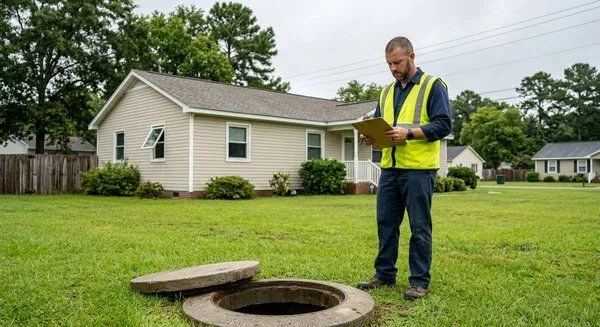
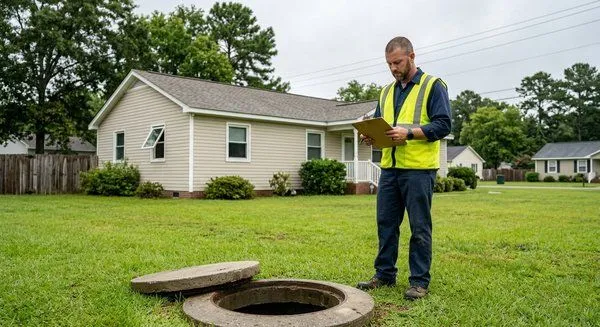
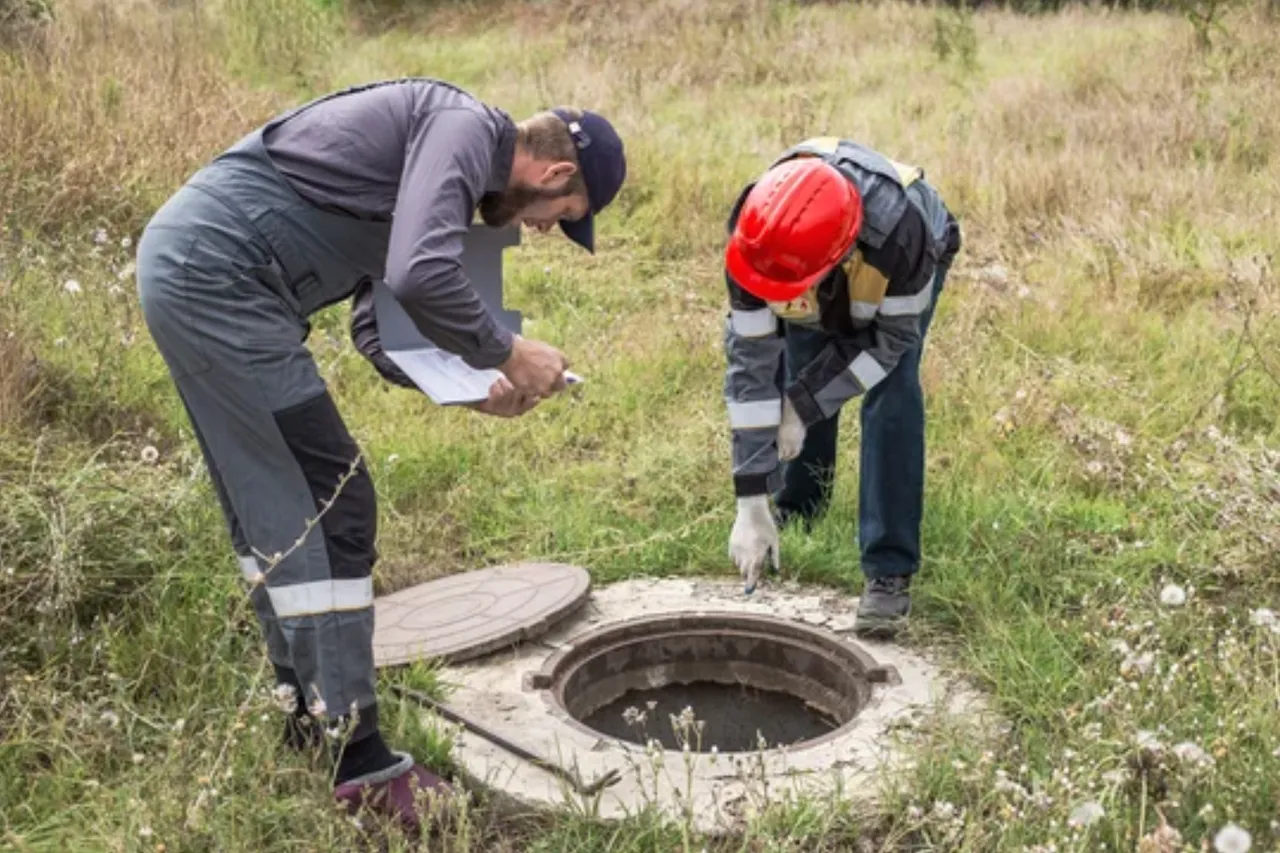
septic system inspection in Greenville NC can identify a compromised drainfield, a cracked distribution box, or a tank nearing capacity before those small issues cascade into a complete system replacement costing $10,000 to $20,000 or more.
What You Should Do After a Major Rain Event
If you experience symptoms after a storm, here is a practical step-by-step approach:
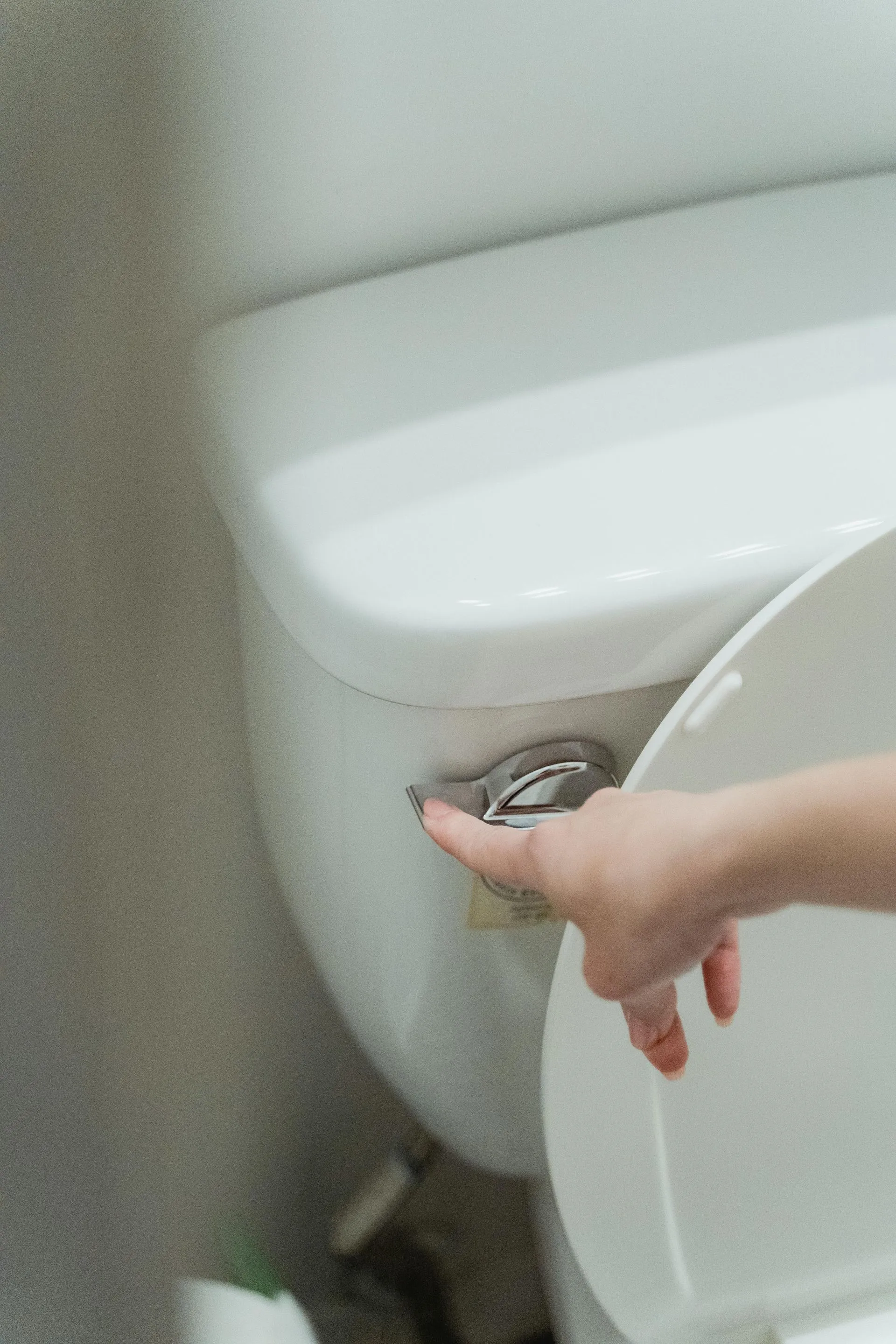
1. Reduce indoor water use immediately. Every flush and every load of laundry pushes more effluent into an already-saturated system. Give your drainfield time to recover as the groundwater recedes.
2. Avoid using heavy equipment or vehicles in the drainfield area. Saturated soil compacts easily, and damage to drainfield trenches from vehicle traffic can be permanent.
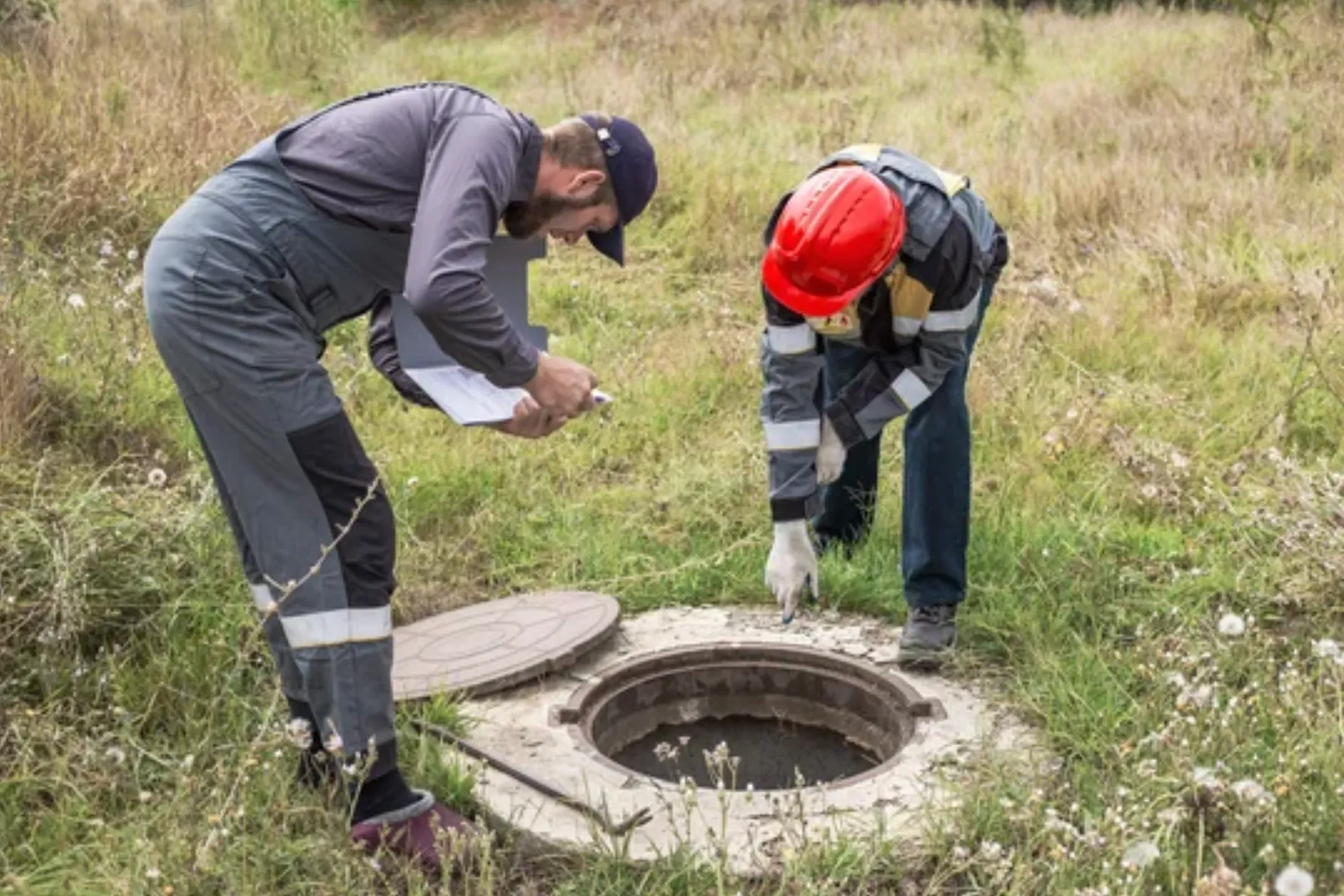
3. Do not open the tank yourself. Flooded conditions can cause dangerous gas buildups and structural instability around access lids.
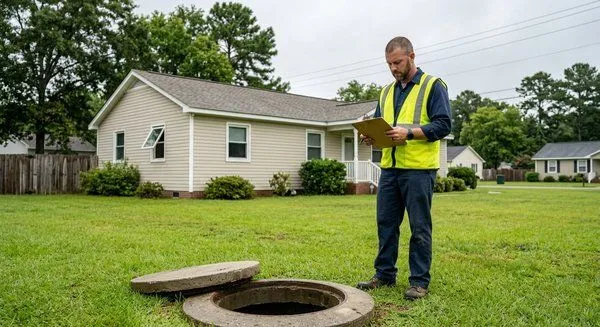
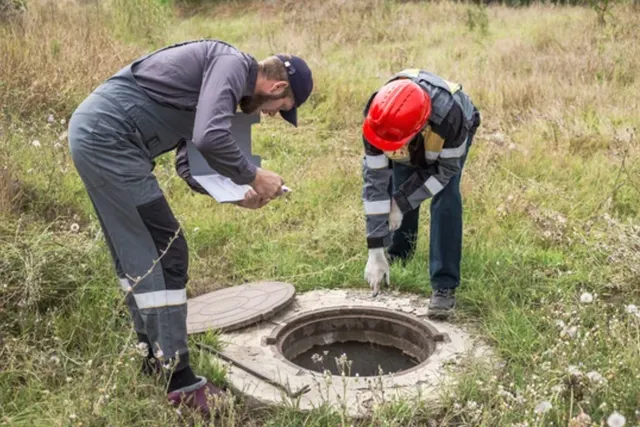
4. Schedule a professional inspection. A qualified technician can assess whether you are dealing with a temporary saturation issue, a failing drainfield, or a tank that legitimately needs septic tank pumping as part of a larger servicing plan.
5. Ask about system upgrades if this happens repeatedly. Properties in low-lying areas or on slow-draining soils may benefit from a Low-Pressure Pipe (LPP) system, a mound system, or an Aerobic Treatment Unit (ATU) that is better suited to your site conditions.
Frequently Asked Questions
Is a backed-up septic system after rain always a sign of drainfield failure?
Not always. In many cases, it is a temporary saturation issue caused by a high water table. However, if it happens repeatedly or takes more than a few days to resolve, it could indicate permanent damage to the drainfield that requires professional evaluation.
How often should I have my septic system inspected in Pitt County?
Industry experts and environmental health departments recommend a professional inspection and pump-out every 3 to 5 years. If you are on heavy clay soils or experience frequent wet seasons, leaning toward the shorter end of that range is a smart move.
Can pumping the tank fix a saturated drainfield?
Pumping relieves pressure on the tank temporarily but does not address the underlying soil saturation. A full inspection is needed to determine whether the drainfield itself has been compromised.
What types of advanced septic systems work better on poor soils?
Low-Pressure Pipe (LPP) systems, mound systems, and Aerobic Treatment Units (ATUs) are all engineered solutions for sites with limited soil absorption. These systems cost more upfront but are often the only compliant option for challenging lots.
How do I know if my property has problematic soil for a septic system?
A licensed soil scientist or environmental health specialist performs a site evaluation and soil morphology assessment before any system is permitted. ASAP Septic Systems can guide you through what to expect during that process.
Protect Your Property Before the Next Storm Hits
The best time to address a septic problem is before it becomes an emergency. ASAP Septic Systems Inc serves homeowners and property owners throughout Greenville, Pitt County, and the surrounding Eastern North Carolina region with honest, professional service built around the specific challenges of our local soils and climate.
Do not wait for a backup to tell you something is wrong.
Schedule Your Septic Inspection Today
Recent Posts